

Why Smart Locks Are Changing Apartment Living
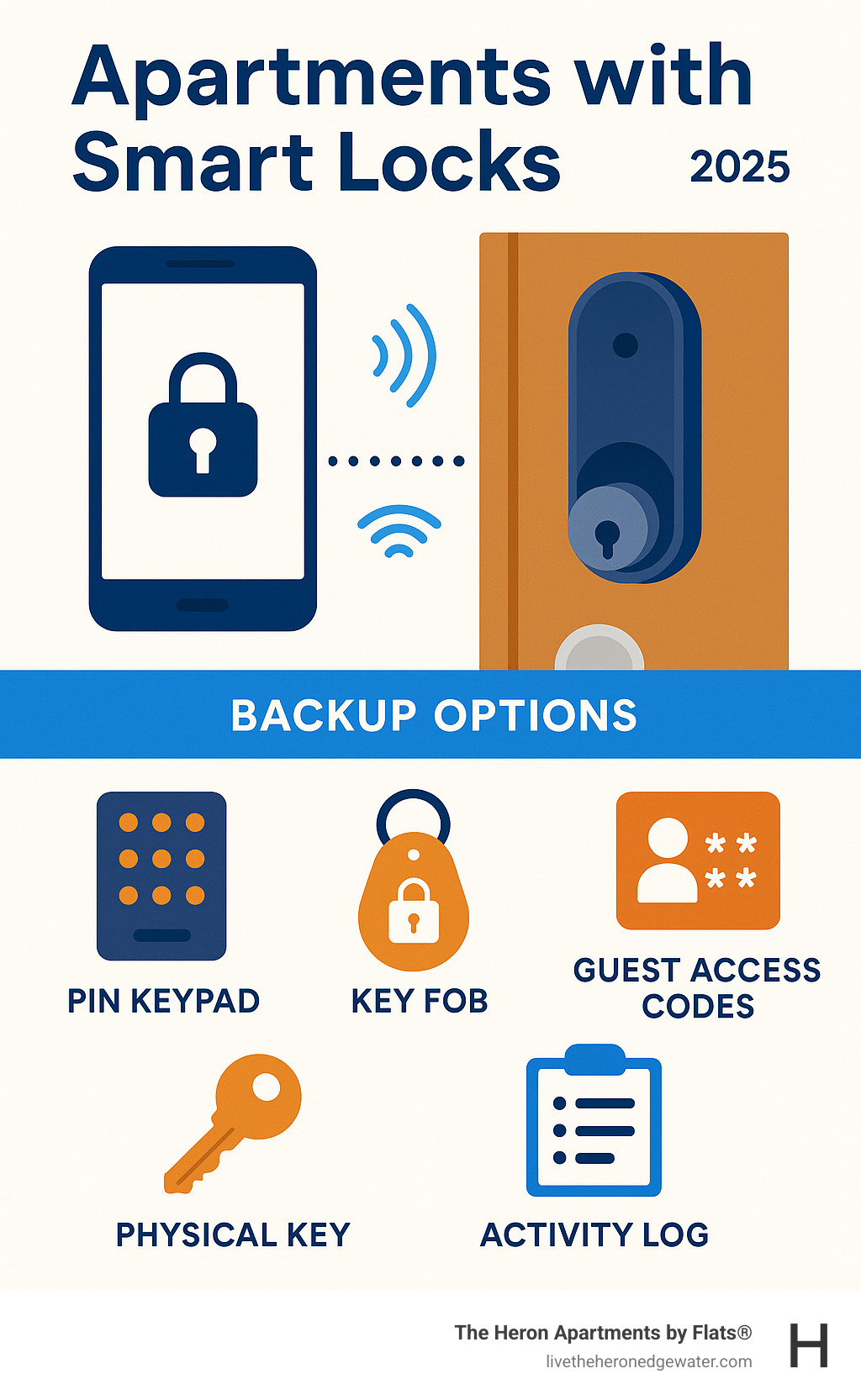
Apartments with smart locks are quickly becoming the new standard for modern renters who value convenience, security, and tech-forward living. These keyless entry systems let you open up your door with your smartphone, a PIN code, or even a key fob - no traditional keys needed.
Key benefits of apartments with smart locks include:
- Keyless convenience - Access your home with your phone, PIN, or fob
- Improved security - Digital encryption and tamper alerts protect your home
- Guest management - Grant temporary access to visitors without physical keys
- Activity monitoring - Track who enters and when through detailed logs
- Remote control - Lock or open up your door from anywhere
- No more lockouts - Multiple backup entry methods keep you from getting stuck outside
According to the National Multifamily Housing Council, 67% of renters want keyless smart locks - nearly as many as want property-wide access control (75%). This growing demand reflects how smart locks solve real problems that traditional locks can't address.
Whether you're considering an apartment that already has smart locks installed or thinking about adding one to your current rental, understanding how these systems work will help you make the most of this modern convenience. Smart locks aren't just about ditching your keys - they're about creating a more secure, flexible, and connected living experience.
A Renter's Guide to Apartments with Smart Locks
Picture this: you're rushing home from work with your hands full of takeout, and your door simply open ups as you approach. Or maybe your friend needs to grab something from your place while you're stuck in traffic downtown - no problem, just send them a temporary access code from your phone. This is the reality of keyless living in modern apartments with smart locks.
The convenience goes far beyond just ditching your keys. Smart locks transform how you manage your daily routine and give you genuine peace of mind. That nagging feeling when you're halfway to work wondering "Did I lock the door?" becomes a thing of the past. Most smart locks include an auto-lock feature that secures your apartment automatically after you leave.
Guest access becomes incredibly simple too. Instead of coordinating key handoffs or hiding spare keys in questionable places (we've all done the fake rock trick), you can create temporary access codes for visitors. Delivery management is a breeze - give your delivery person a one-time code and get notified the moment they use it. You'll always know exactly who entered your apartment and when, thanks to detailed activity logs right on your phone.

This level of control and monitoring makes smart locks perfect for the modern lifestyle you'll find in Chicago apartments with best amenities. Whether you're managing a busy social calendar or just want the convenience of never fumbling for keys again, smart locks adapt to how you actually live.
Key Security Benefits of apartments with smart locks
When it comes to protecting your home, apartments with smart locks offer significant advantages over traditional locks. The security improvements go well beyond convenience - they address real vulnerabilities that physical keys simply can't solve.
Digital encryption forms the foundation of smart lock security. Unlike physical keys that can be copied at any hardware store, smart locks use advanced encryption to protect your access credentials. This makes unauthorized duplication virtually impossible - no more worrying about who might have made copies of your keys over the years.
Tamper alerts add another layer of protection. Many smart locks detect when someone tries to force entry or tamper with the lock mechanism. You'll get instant notifications on your phone if anything suspicious happens, allowing you to respond quickly or alert authorities if needed.
The ability to create unique access codes revolutionizes how you manage home security. Each person can have their own PIN code, and you can set these codes to be temporary, recurring, or permanent. When a roommate moves out or you no longer need to give someone access, you can revoke their code instantly - no need to rekey the entire lock.
Activity logs provide complete transparency about who enters your apartment and when. This monitoring capability is invaluable for accountability and gives you a clear record of all access events. You can check your smartphone app anytime to see exactly what's been happening at your door.
Perhaps most importantly, smart locks eliminate the risk of physical key duplication. There are no keys to lose, steal, or copy. When you move out, access can be revoked digitally rather than hoping all copies of physical keys are returned. This creates a much more secure transition between tenants.
Convenience Features in apartments with smart locks
The convenience features of smart locks are designed to integrate seamlessly into your daily routine, making access effortless no matter what situation you're in.
Smartphone app control serves as the primary interface for most smart locks. Your phone essentially becomes your key, allowing you to lock and open up your door from anywhere. This means you can let someone in even when you're not home, or double-check that you locked up after leaving.
For those who love wearable tech, smartwatch access takes convenience to the next level. A quick tap on your wrist opens your door - perfect when your hands are full of groceries or you're juggling multiple bags.
PIN codes provide a reliable backup option and make it easy to grant access to people who don't have the app. You can create multiple unique codes for different people - family members, friends, or service providers each get their own number.
Some systems also offer key fobs - small, portable devices that work like digital keys. They're great for people who prefer something physical to carry but still want the security benefits of digital access.
Advanced smart locks now feature seamless Apple Wallet integration, allowing you to add your digital key directly to your iPhone or Apple Watch wallet. This means accessing your home is as simple as tapping your device against the lock - just like making a contactless payment.
Voice commands through assistants like Google Assistant or Amazon Alexa enable hands-free control. "Hey Google, open up the front door" can be incredibly helpful when you're carrying something heavy or your hands aren't free.
These features work together to create a flexible, adaptable system that fits different lifestyles and situations, making smart locks an ideal match for modern apartment living.
Understanding the Technology: How Smart Locks Work
Smart locks might seem like magic, but they're actually quite straightforward once you understand the basics. At their core, these electronic devices replace or work alongside traditional deadbolts, giving us digital control over our home access. Apartments with smart locks typically use one of two main installation types: full deadbolt replacements that completely swap out the existing lock, or interior-only retrofits that cleverly fit over the current deadbolt while keeping the exterior looking unchanged.
The retrofit option is particularly popular in rental situations because it doesn't require permanent modifications to the door - something most landlords appreciate. This means we can enjoy all the benefits of smart lock technology without worrying about our security deposit.
The real magic happens through connectivity. Smart locks use different communication methods to talk to our devices and potentially connect to the internet. Bluetooth locks connect directly to our smartphone when we're close by - usually within about 30 feet. They're great for everyday use and easy on battery life, but they typically need a separate Wi-Fi bridge for remote access.
Z-Wave locks create what's called a mesh network, where devices communicate with each other over longer distances. These usually need a smart home hub to function properly, but they offer excellent battery life and reliable performance. Wi-Fi locks connect directly to our home's Wi-Fi network, giving us remote access without needing extra equipment. The trade-off? They tend to use more battery power than other options.
| Connectivity Type | Connectivity Range | Battery Impact | Remote Access |
|---|---|---|---|
| Bluetooth | Short (approx. 30 ft) | Low | Requires bridge |
| Z-Wave | Medium (mesh network) | Low | Requires hub |
| Wi-Fi | Long (home network) | High | Direct |
Do All Smart Locks Require Wi-Fi?
Here's something that surprises many people: not all smart locks need Wi-Fi to work! While having an internet connection open ups advanced features like remote access and instant notifications, many smart lock benefits work perfectly fine offline.
Offline systems operate independently of the internet. They use Bluetooth for local control - so we can still open up our door with our phone when we're standing right there - or allow entry through PIN codes on a keypad. We still get keyless access, activity logs stored on the lock itself, and mobile credentials. These systems are perfect for those who want smart lock convenience without dealing with complex setup or worrying about internet outages.
Online systems connect to Wi-Fi networks, allowing us to control our lock from anywhere with internet access. This means we can lock or open up our door from work, receive instant notifications about activity, and integrate with other smart home devices. The convenience is incredible, but it does come with higher battery consumption.
The main difference comes down to remote access. Offline locks work great when we're home, while online locks let us control everything from anywhere. Battery life is another consideration - Wi-Fi connectivity generally drains batteries faster than Bluetooth or Z-Wave, though modern locks are getting much better at managing power efficiently.
Smart Home Integration
One of the most exciting aspects of apartments with smart locks is how they can work with other smart devices to create a truly connected living experience. Instead of just open uping our door, our smart lock can become the conductor of our home's digital orchestra.
Picture this: as we open up our door after a long day, our smart lock automatically signals our thermostat to adjust to our preferred temperature while smart lighting gently illuminates our entryway. This "scene setting" capability means open uping our door can trigger a whole series of welcoming actions that make coming home feel special.
Smart locks integrate beautifully with popular voice assistants like Google Assistant, Amazon Alexa, and Apple HomeKit. We can simply say "Alexa, lock the front door!" or create custom routines where a single command handles multiple tasks. A "Leaving Home" routine might lock the door, turn off lights, and adjust the thermostat all at once.
This connected home experience is particularly impressive in our adaptable spaces. The ability to connect our smart lock with other intelligent devices adds another layer of sophistication to daily life, changing our apartment from just a place to live into a responsive, intelligent home that anticipates our needs.
Important Considerations for Renters
Moving into apartments with smart locks can be an exciting step toward modern living, but there are several important factors to consider before making any decisions. Whether you're eyeing a unit that already has smart lock technology or thinking about installing your own, understanding the key considerations will help you steer this tech upgrade smoothly.
Landlord communication should be your first priority. Most lease agreements include specific clauses about property modifications, and smart locks often fall into this category. Before making any changes to your door hardware, take time to review your lease agreement thoroughly. Some properties have approved smart lock models or specific installation requirements that you'll need to follow.
When it comes to privacy policies and data access, it's worth asking the right questions. Smart locks collect detailed information about when people enter and exit your apartment. You'll want to understand who has access to this data - whether it's just you, the property management company, or potentially third-party service providers. Transparency about data usage helps you make informed decisions about your privacy.
Emergency procedures are another crucial consideration. What happens if the smart lock malfunctions during a power outage? What if your phone battery dies when you're trying to get inside? Understanding backup entry methods and knowing how to contact property management in urgent situations can save you from being locked out of your own home.

If Your Apartment Comes with a Smart Lock
Finding an apartment that already features smart lock technology is like finding a bonus amenity you didn't know you needed! When you move into apartments with smart locks that come pre-installed, you're stepping into a world of convenience that's already been set up for you.
Your property management team will typically provide you with access to a resident app that serves as your digital command center. This app becomes your new best friend, allowing you to lock and open up your door, manage guest access, and review activity logs all from your smartphone. Take some time to explore all the features - you might find capabilities you hadn't considered, like scheduling automatic lock times or setting up notifications for specific activities.
Understanding guest access protocols is particularly helpful if you frequently have visitors. Most property management systems have streamlined processes for creating temporary access codes or digital keys for friends, family, or service providers. Some systems even allow you to set time limits on these codes, so a delivery person's access automatically expires after a few hours.
The activity logs feature is where smart locks really shine for security-conscious renters. These detailed records show exactly who accessed your apartment and when, creating a digital paper trail that traditional locks simply can't provide. It's reassuring to check your phone and see that your dog walker arrived exactly when they said they would, or to confirm that a package was delivered while you were at work.
Power and internet outage plans are worth discussing with your property management team. Modern smart locks typically run on battery power and include backup access methods like keypads or physical key overrides. Knowing these backup options beforehand prevents panic during unexpected outages.
If you encounter any issues with your smart lock, reporting problems promptly helps maintain the system's reliability. Most property management companies have established procedures for smart lock maintenance and troubleshooting, treating these devices like any other apartment appliance that needs occasional attention.
If You Want to Install Your Own Smart Lock
For renters who want to upgrade their current setup, installing your own smart lock can be a rewarding project that brings modern convenience to your living space. However, success depends on careful planning and clear communication with your landlord.
Reviewing your lease is absolutely essential before making any modifications. Lease agreements often include specific language about changing locks or altering fixtures, and you'll want to understand these terms completely. Some leases prohibit any modifications, while others allow changes with proper approval.
Getting landlord approval is always the smart move, even if your lease doesn't explicitly forbid lock changes. Approaching your landlord or property manager with a clear plan shows respect for their property and can prevent future disputes. Many landlords actually appreciate smart locks because they improve security and eliminate the need for spare key management. When you present your request, emphasize the security benefits and your commitment to restoring the original lock when you move out.
Choosing renter-friendly models makes the entire process smoother. Look for smart locks specifically designed for rental situations - these often replace only the interior portion of the deadbolt or install over existing hardware without requiring permanent modifications. Some models are designed to work with standard deadbolt configurations, making installation and removal much simpler.
Keeping the original lock hardware is crucial for protecting your security deposit. When you remove components to install your smart lock, carefully store all original parts in a safe place. Label everything and take photos of the original setup before you begin. This attention to detail ensures you can easily restore the traditional lock when you move out, avoiding any charges for missing or damaged parts.
The installation process for renter-friendly smart locks is typically straightforward, often requiring only basic tools like a screwdriver. Most manufacturers provide detailed instructions, and many models are designed specifically for DIY installation. For comprehensive guidance on apartment door locks, including smart options suitable for rental properties, resources like this apartment door lock buying guide can provide valuable insights.
By taking these thoughtful steps, you can enjoy the benefits of smart lock technology while maintaining a positive relationship with your property management and protecting your rental agreement.
Frequently Asked Questions about Smart Locks in Apartments
Living in apartments with smart locks brings up plenty of questions - and that's completely normal! New technology can feel a bit overwhelming at first, especially when it's protecting our home. Let's tackle the most common concerns we hear from renters who are curious about making the switch to keyless living.

What happens if my phone dies or the power goes out?
This worry keeps many people up at night, but smart lock designers have thought of everything! The good news is that you'll never be stuck outside your apartment, even when technology fails.
Backup entry methods are built into every quality smart lock system. Most feature keypads that let you punch in your PIN code, no smartphone required. It's like having a digital spare key that works even when your phone is completely dead.
Many smart locks also include physical key overrides - yes, actual metal keys! These work just like traditional locks, so you can always get in the old-fashioned way if needed. Think of it as the ultimate backup plan.
Here's something that surprises many renters: smart locks run on battery power, not your building's electricity. When the power goes out in your neighborhood, your smart lock keeps working perfectly. Plus, you'll get low-battery notifications on your phone weeks before the batteries actually die, giving you plenty of time to swap them out.
Are smart locks less secure than traditional locks?
Actually, smart locks are typically more secure than traditional locks - not less! This might sound counterintuitive, but here's why digital often beats analog when it comes to home security.
Modern smart locks use encryption standards similar to what banks use to protect your financial information. The level of technical skill needed to hack a well-designed smart lock is far beyond what most opportunistic thieves possess. Meanwhile, lock picking traditional deadbolts is a skill that's much easier to learn and practice.
The biggest security advantage? No physical keys to worry about. Traditional keys can be lost at the gym, stolen from a purse, or copied without your knowledge. Smart locks eliminate this vulnerability entirely - you can't lose a digital key under a couch cushion!
Tamper alarms add another layer of protection that traditional locks simply can't match. If someone tries to mess with your smart lock, you'll get an instant alert on your phone. Try getting that kind of real-time security update from a regular deadbolt!
Can my landlord enter my apartment without my knowledge?
This question touches on something really important - your privacy rights as a renter. The short answer is that smart locks actually give you more transparency about who enters your home, not less.
Access logs are one of the most valuable features of smart locks. Every single entry gets recorded with a timestamp and user identification. Unlike traditional keys, where someone could enter without leaving any trace, smart locks create a permanent record that you can review anytime through your app.
Your tenant privacy rights remain exactly the same whether you have a smart lock or traditional deadbolt. Landlords must still follow all local laws about advance notice and legitimate reasons for entry. Smart locks don't change these legal protections - they just make everything more transparent.
Lease agreement terms will spell out when and why your landlord can enter your apartment. Smart locks actually make it easier to verify that these terms are being followed, since you have a clear digital record of all access.
Property management protocols at quality communities like The Heron Apartments operate with clear standards for access, regardless of lock type. The beauty of smart locks is that they provide transparency for both tenants and property managers. Automated solutions can boost business operations while maintaining clear records that protect everyone involved.
The bottom line? Smart locks don't diminish your privacy rights - they actually give you better tools to monitor and verify who has accessed your home.
Conclusion: The Smart Choice for Modern Renting
Living in apartments with smart locks has transformed from a luxury to a necessity for today's renters. Throughout our exploration, we've seen how these innovative systems deliver both convenience and security in ways that traditional locks simply cannot match. Whether it's the freedom of keyless entry, the peace of mind from activity logs, or the ability to grant access to guests from anywhere, smart locks truly revolutionize how we interact with our homes.
The modern living experience extends far beyond just opening a door with our phone. Smart locks create a foundation for connected living, integrating seamlessly with other smart home devices to anticipate our needs and respond intelligently. From automatically adjusting our thermostat when we arrive home to providing detailed security logs that keep us informed, these systems make our daily routines smoother and more secure.
At The Heron Apartments, we understand that today's renters expect technology that improves their lifestyle. Our commitment to providing luxury living in Edgewater, Chicago, means embracing innovations like smart locks that align perfectly with our residents' expectations for sophisticated, convenient living. Our focus on cutting-edge amenities and superior resident experiences reflects our belief that home should be a place where technology works for you, not against you.
The choice is clear: smart locks represent the future of residential living, offering benefits that traditional locks simply cannot provide. For renters seeking a connected, secure, and convenient living experience, apartments with smart locks are indeed the smart choice.