

How to Find Pet Friendly Apartments That Fit Your Life
Pet friendly apartments allow pets, but each community sets its own rules, fees, and lease terms. A listing marked "pet friendly" is a useful starting point, not a full policy. Navigating the rental market with a companion requires looking beneath surface-level advertising to understand how a property manages animal occupancy, common spaces, and resident responsibilities.
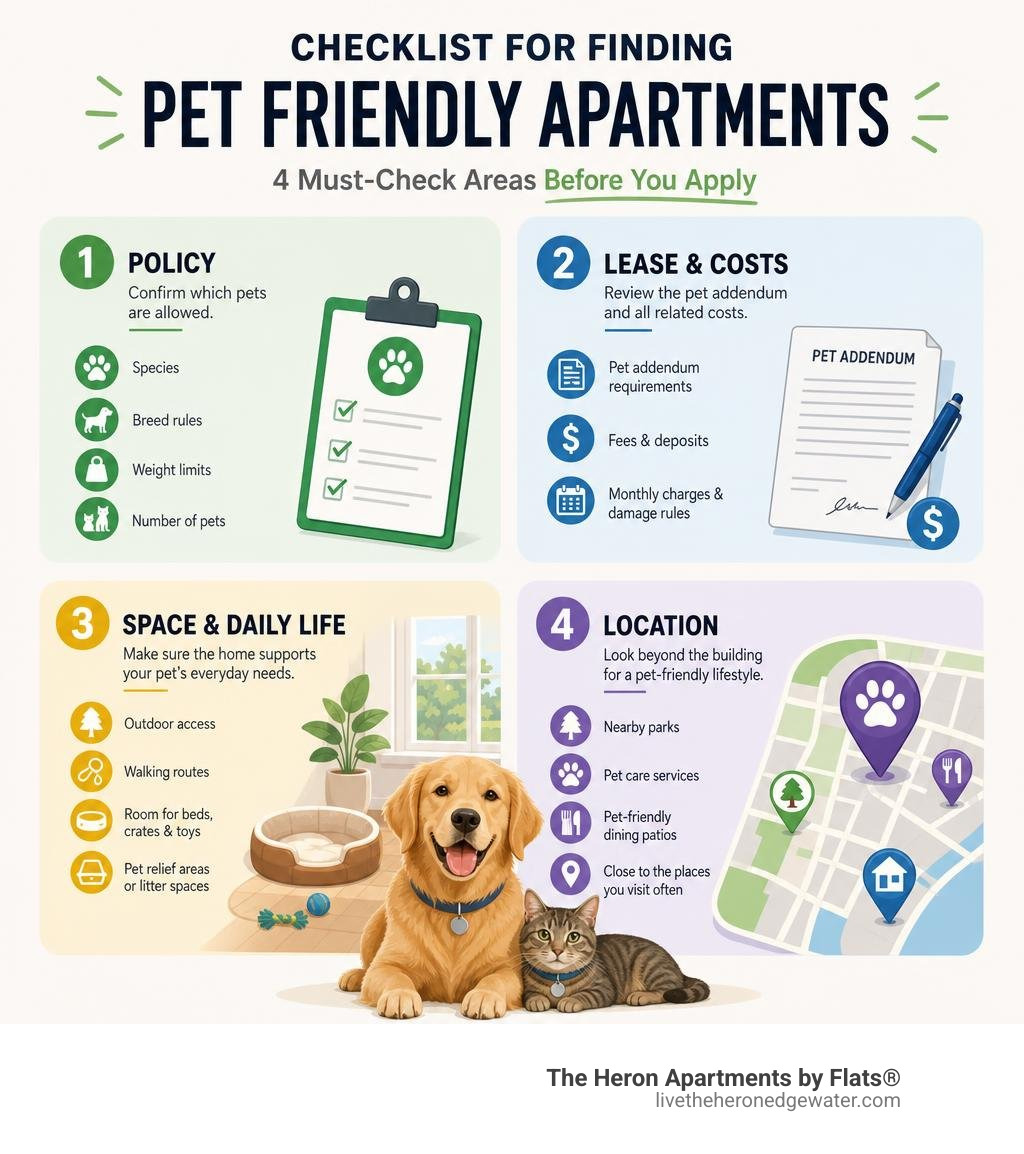
Before you apply, confirm these essentials:
- Which pets are allowed - Ask about species, breed rules, weight limits, and the number of pets permitted in a single household.
- What the lease requires - Review the pet addendum thoroughly, including administrative fees, deposits, monthly charges, and specific damage rules.
- What daily life will look like - Consider outdoor access, walking routes, dedicated pet relief areas, and available interior space for beds, crates, toys, or litter boxes.
- Whether the location works - Look beyond the immediate building for nearby parks, veterinary care, pet-friendly dining patios, and green pathways you will visit often.
It is also helpful to think through your pet's daily schedule before touring. Note how often your dog needs outdoor breaks, where your cat's litter area would fit, and how you will store food, leashes, grooming supplies, and toys. These practical details can reveal whether a floor plan, elevator setup, or amenity layout will support your routine after move-in.
For renters balancing a busy city schedule with a dog or cat, the ideal home is not simply one that accepts animals. It is a residence where the pet policy is transparent, the floor plan supports your daily routine, and there are no unwelcome surprises after signing your lease. Planning ahead ensures that both you and your companion enjoy a comfortable, stress-free living experience from day one.
Understanding Pet Policies and Fee Structures in Pet Friendly Apartments
Navigating pet policies requires looking beyond the basic marketing headline. Property management teams establish structured rules to balance building cleanliness, resident comfort, and overall safety. Understanding these lease requirements and legal obligations upfront ensures a smooth leasing process for you and your companion.
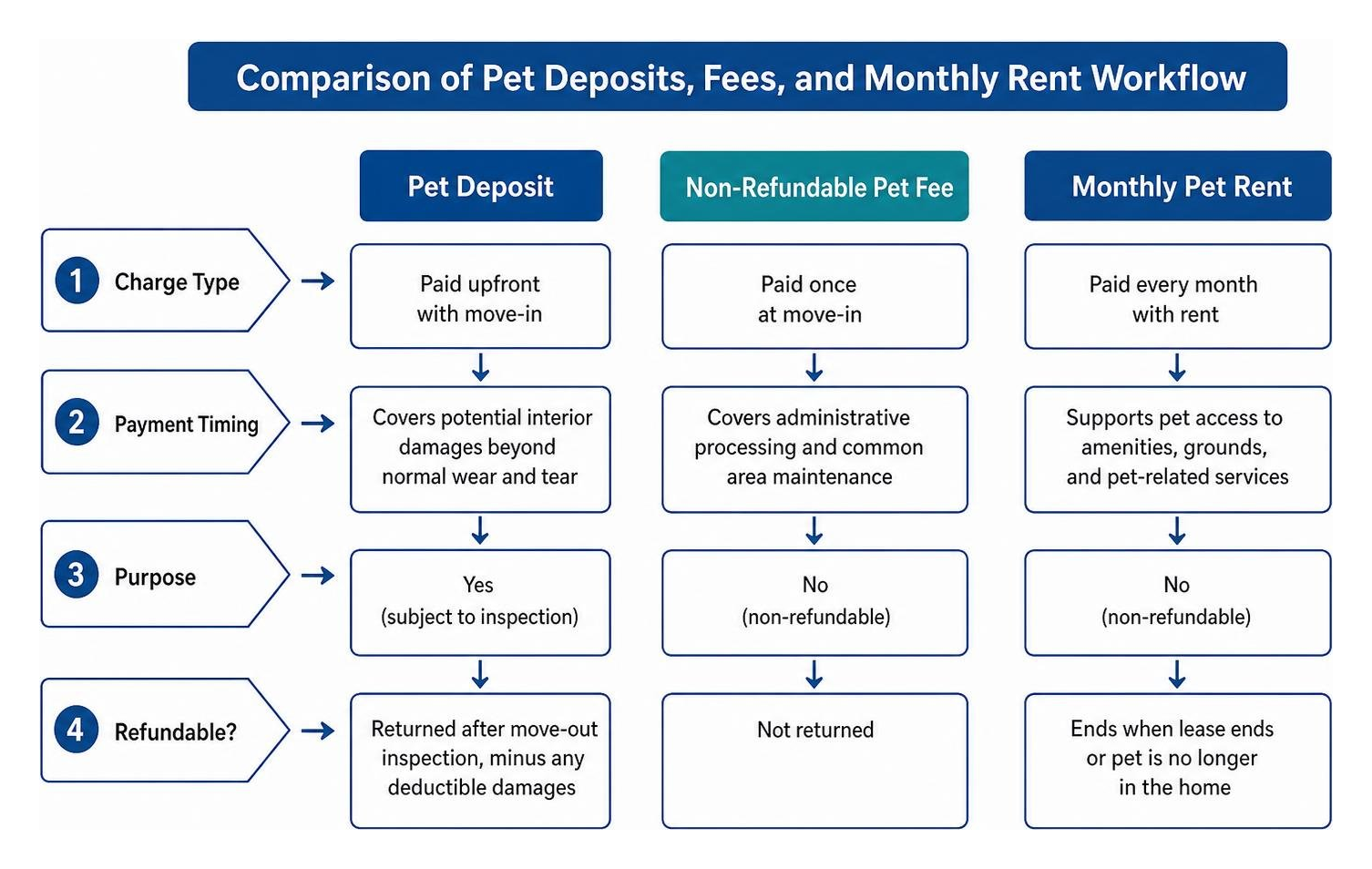
When searching for pet-friendly apartments for rent, renters typically encounter three separate pet-related charges: non-refundable fees, security deposits, and recurring monthly charges. Knowing how these terms function helps eliminate surprises when signing your lease addendum.
| Financial Term | Refundable? | Description & Purpose |
|---|---|---|
| Pet Deposit | Yes (subject to inspection) | Upfront coverage reserved exclusively for potential interior damages beyond standard wear and tear. |
| Non-Refundable Pet Fee | No | One-time administrative fee to cover initial building processing and common area maintenance. |
| Monthly Pet Rent | No | Recurring monthly charge added to base rent for pet access to building amenities and grounds. |
Pet Rent, Fees, and Deposits Explained
The difference between a pet fee and a pet deposit comes down to refundability and formal purpose. A pet deposit operates like a standard security deposit. If your dog or cat causes no damage to flooring, trim, or entryways, this sum is returned following the final move-out inspection.
In contrast, a pet fee is a non-refundable, one-time payment. Management uses this fee to cover processing administrative expenses and oversight. Monthly pet rent is a separate charge paid alongside your regular rent. This recurring contribution helps maintain shared property facilities, waste stations, and specialized pet amenities throughout the complex.
Breed Bans, Weight Limits, and Pet Caps
Apartment communities often enforce limits regarding allowed species, weight thresholds, and the total number of animals in a unit. Most property management guidelines set a clear limit capping households at a maximum of two pets per apartment home.
Breed restrictions and weight guidelines are usually established by insurance underwriting contracts rather than personal management preferences. Major animal welfare organizations such as the Humane Society of the United States advocate for responsible pet ownership and clear property guidelines. Underwriters maintain guidelines regarding specific canine breeds to manage liability risk. When evaluating communities, look for properties with clear apartments no breed restrictions policies that welcome pets based on individual behavior and leasing guidelines rather than rigid breed charts.
Essential Amenities and Housing Types for Pet Owners
The right environment makes daily routines effortless. Modern urban developments incorporate specialized features designed around pet care, taking convenience to a new level for busy residents and their furry companions.
Top Amenities to Seek in Pet Friendly Apartments
When evaluating prospective homes, dedicated pet features make a substantial difference in daily comfort. Features to look for include:
- In-Building Dog Wash Stations: On-site pet spas and grooming rooms allow you to clean off muddy paws comfortably before entering your residence.
- On-Site Pet Relief & Dog Runs: Secure outdoor relief zones or rooftop runs make late-night or early-morning trips quick, convenient, and safe.
- Proximity to Green Spaces: Access to neighborhood parks, lakefront trails, and tree-lined sidewalks simplifies daily walking routines.
- Dedicated Waste Stations: Stocked disposal bags and clean receptacles throughout the grounds keep the community pristine and hygienic.
Selecting communities offering apartments with dog wash facilities eliminates the messy hassle of bathing your pet in a standard bathroom tub or searching for off-site grooming salons during inclement weather.
Housing Options: Conventional and Luxury Units
Pet policies vary significantly across different housing structures and management styles:
- Conventional Buildings: Standard rental properties generally provide standard policies, featuring basic pet limits and required deposits, but may lack dedicated animal amenities on site.
- Luxury Rental Residences: High-end buildings elevate pet living by integrating built-in grooming salons, rooftop relief areas, and flexible floor layouts designed to streamline daily pet care routines.
Choosing pet-friendly luxury apartments provides access to premium finishes alongside spatial flexibility. For instance, at The Heron in Edgewater, Chicago, our residences pair upscale features like in-unit laundry and a rooftop lounge with adaptable Ori furniture units, allowing you to reconfigure living areas effortlessly to create extra floor space for pet beds and play space without sacrificing comfort.
Key Questions to Ask and City-Specific Apartment Hunting Strategies
Finding the ideal home requires asking targeted questions during tours and filtering search results accurately within your target market. A thorough evaluation process ensures that both the neighborhood environment and the building policies align with your lifestyle.

How to Search for Pet Friendly Apartments Across Major Cities
Urban apartment searches require a neighborhood-focused strategy. In dense metropolitan markets like Chicago, availability varies by neighborhood, floor level, and proximity to public parks or lakefront trails. Utilizing neighborhood-focused guides—such as a dedicated pet-friendly apartments Chicago guide—helps refine your search to dog-friendly pockets like Edgewater, Lincoln Park, or Rogers Park.
When filtering listings online, confirm whether pet allowances apply across the entire property or only on designated floors. Additionally, inquire whether elevator access is easily accessible from pet relief zones.
Lease Questions and Emergency Rent Protections
Before signing your contract, clarify all rules directly with property management:
- What is the maximum number of pets allowed per unit? (Verify the standard community limit, which is typically capped at two pets).
- Are there specific common spaces or resident amenities off-limits to pets?
- What is the policy regarding pets on private balconies, patios, or terraces?
- Are pet deposits fully refundable upon a successful move-out inspection?
- How does building maintenance handle scheduled work orders when a pet is inside the residence?
Additionally, review local housing guidelines regarding renter protections, lease addendums, and tenant rights. Knowing your legal obligations protects both your tenancy and your pet's long-term residency status.
Frequently Asked Questions About Pet Friendly Apartments
What is the difference between a pet fee and a pet deposit?
A pet deposit is refundable if your pet leaves the apartment undamaged upon move-out inspection. A pet fee is non-refundable and covers administrative processing expenses and initial building registration.
Why do apartments enforce weight and breed restrictions?
These guidelines are primarily mandated by third-party insurance providers to manage liability policies across the property, rather than personal preferences of the building management team.
How can roommates co-exist comfortably with pets in small spaces?
Establish clear expectations and rules before moving in together. Designate personal pet zones, arrange common areas to accommodate litter boxes or crates outside of main walkways, use air purifiers, and keep feeding routines consistent. Utilizing modular or adaptable furniture layouts can also free up significant floor area in shared living rooms.
Conclusion
Finding ideal pet friendly apartments comes down to clear communication, checking lease details, and selecting a home that accommodates your daily routine. By confirming pet rules, understanding deposit structures, and choosing a floor plan that maximizes living space, you can create a seamless and comfortable lifestyle for both you and your companion.
At The Heron Apartments by Flats® in Edgewater, Chicago, we offer thoughtfully designed luxury residences featuring in-unit laundry, a rooftop lounge, adaptable Ori living space designs, and true pet-friendly hospitality. Explore our modern homes today using our pet-friendly apartments near me guide and find your next apartment in Chicago.