

A Practical Way to Find Ideal Studio Apartments
Studio apartments can be a streamlined, low-maintenance way to live close to work, dining, transit, and entertainment. The best option depends on matching your daily lifestyle with the floor plan layout, lease terms, and features you will use every day.
A quick starting checklist:
- Review overall residence details, including included utilities, parking options, pet policies, and building features.
- Compare several neighborhoods and nearby suburbs, not just one city center.
- Look at traditional studios, efficiencies, and micro-units to find the right balance of space and layout.
- Check for current move-in incentives and available lease term options.
- Tour the actual floor plan and measure storage, kitchen workspace, and furniture fit before applying.
A studio can make daily life simpler, but small differences in location, square footage, and lease details can have a big effect on overall comfort. The five tips below help you sort through listings with less guesswork.
Tip 1: Compare Regional Rental Markets and City vs. Suburbs Options
Finding the right residential space begins with understanding how geographic location influences living arrangements. Metropolitan areas like Chicago feature distinct neighborhood profiles, where living near major transit lines or coastal lakefronts offers exceptional convenience and vibrant community energy.
When searching for studio apartments, evaluating location characteristics helps match daily routines with neighborhood offerings. Downtown cores put cultural venues, business hubs, and dining steps from your front door. Meanwhile, vibrant lakefront neighborhoods like Edgewater provide a unique balance of scenic outdoor access, beaches, and smooth connections to central employment centers.
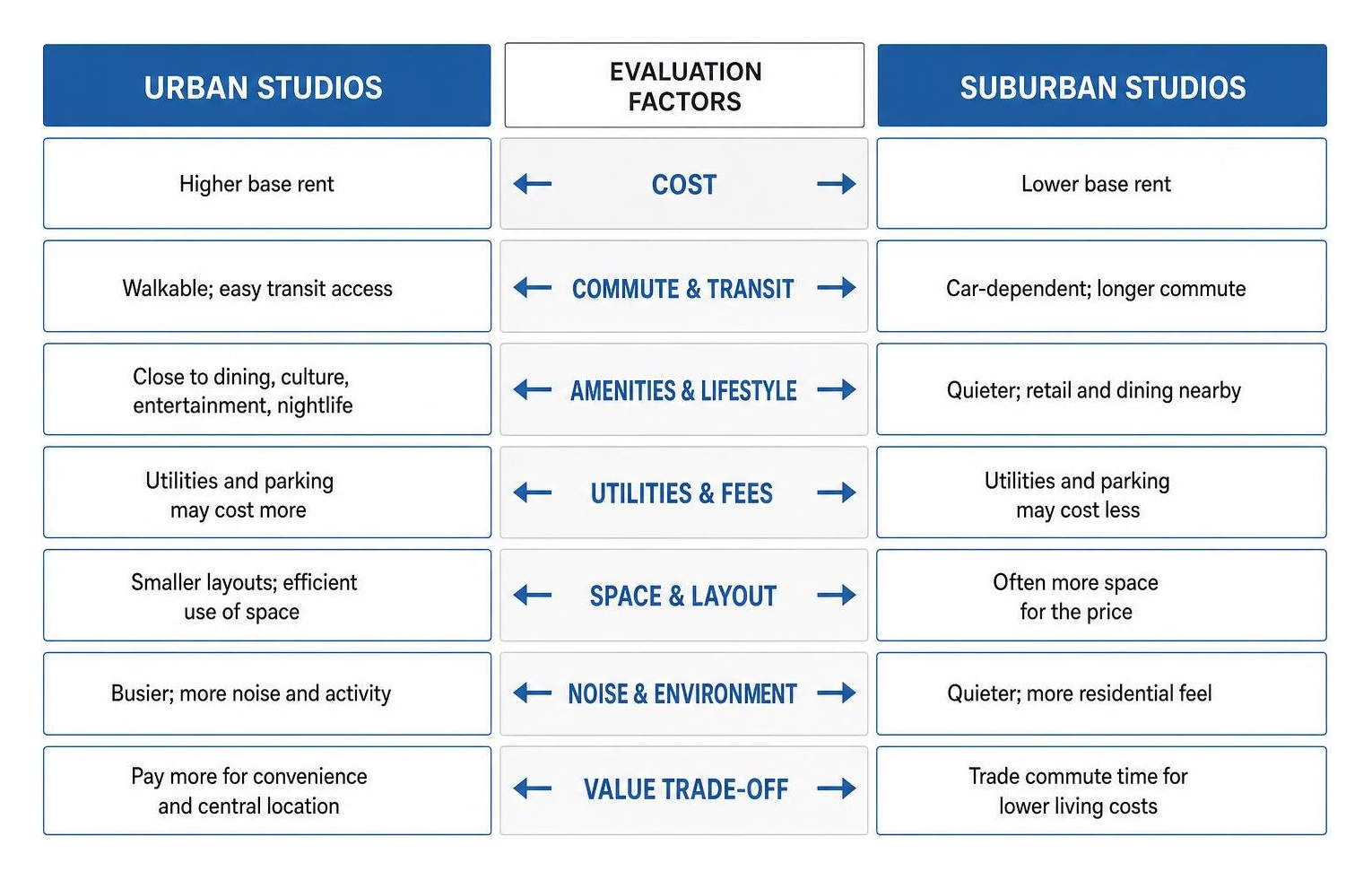
Suburbs vs Urban Studio Apartments
Evaluating urban locations against nearby suburban options involves looking at daily lifestyle benefits:
- Transit and Commute Access: Urban environments often allow residents to live without a personal vehicle, relying on public transportation networks like the CTA Red Line) or local bus routes.
- Walkability: City neighborhoods feature high walkability scores, putting grocery stores, coffee shops, and healthcare facilities within easy walking distance.
- Community Amenities: Urban districts provide immediate access to public parks, lakefront trails, and neighborhood gathering spaces.
- Unit Availability: Dynamic city neighborhoods present a high concentration of specialized floor plans tailored to modern living.
Tip 2: Know the Types of Studio Apartments: Micro-Units vs. Efficiencies
Not all single-room layouts are created equal. Understanding floor plan categories ensures that your living space supports your daily routines.
A traditional studio apartment features a single open main room combining living, sleeping, and dining functions, alongside a full-size bathroom and a distinct kitchen or kitchenette area.
An efficiency unit typically features a more compact footprint with scaled-down kitchen features, such as a smaller stove or limited counter space. For a deep dive into these streamlined layouts, explore our Efficiency Apartments Ultimate Guide 2026.
Micro-units prioritize ultra-compact, high-efficiency living, combining smart engineering with shared community spaces to maximize functional living areas.
| Feature | Traditional Studio | Efficiency Apartment | Micro-Unit |
|---|---|---|---|
| Typical Size Range | 400 – 550 sq. ft. | 300 – 450 sq. ft. | 180 – 350 sq. ft. |
| Kitchen Setup | Full kitchen with standard appliances | Compact kitchenette | Streamlined kitchen module |
| Living / Sleeping Area | Open layout with space for distinct zones | Combined single living space | Integrated multi-functional design |
| Ideal Living Style | Independent, spacious open-plan living | Streamlined solo occupancy | Ultra-dense, minimalist lifestyle |
Micro-Apartments vs Traditional Units
Micro-apartments rely on clever spatial design to deliver a seamless living experience within a smaller physical footprint. High ceilings, expansive windows, and integrated storage solutions create an open, airy feeling. Many modern micro-unit developments complement individual homes with extensive community areas, including co-working lounges, fitness centers, and rooftop decks.
Traditional studio apartments offer added spatial flexibility, making it easy to create dedicated areas for working, sleeping, and relaxing without specialized built-in fixtures.
Tip 3: Review Lease Terms, Timing, and Off-Campus Options
Lease structure can shape how well a home fits your routine over time. Instead of focusing only on the first available move-in date, review the full leasing framework so you understand how the apartment community handles term length, renewal timing, notice requirements, package procedures, maintenance requests, and resident responsibilities.
Important lease details to review include:
- Lease Duration: Confirm the available term lengths and how the selected term aligns with your expected timeline in the neighborhood.
- Move-In Scheduling: Ask how key pickup, elevator access, loading areas, and building orientation are coordinated before move-in day.
- Renewal Procedures: Review how far in advance renewal options are shared and what notice is required if your plans change.
- Utility Setup and Service Responsibilities: Clarify which services residents arrange directly and which building systems are managed by the community.
- Community Policies: Read policies for pets, guests, package rooms, shared amenities, bike storage, and maintenance access before applying.
Taking time to compare lease language can help you avoid surprises after move-in. A clear lease should explain what is included, what requires approval, and how communication with the leasing or management team works throughout your residency.
Student Studio Apartments vs. Standard Rentals
Housing options located near academic institutions often feature unique operational models:
- Leasing Cycles: Academic-adjacent housing frequently aligns with semester schedules or seasonal start dates.
- Furnished Offerings: Many student-oriented rentals include turn-key furniture packages to simplify moving day.
- Individual Lease Structures: Certain developments offer specialized contractual terms tailored to student occupants.
Standard luxury apartment communities cater to a broad range of residents by providing unfurnished, highly customizable floor plans, long-term stability, and premium residential services. For renters comparing off-campus options with conventional apartment communities, the best choice often comes down to desired flexibility, furniture preferences, amenity access, and how closely the lease structure matches daily life.
Tip 4: Evaluate Must-Have Amenities for Daily Convenience
Building amenities directly shape your quality of life. Premium property features simplify daily chores and enhance lifestyle comfort right at home.
Key amenities to prioritize include:
- In-Unit Laundry: Having a modern washer and dryer inside your residence eliminates trips to commercial laundromats and adds convenience.
- Pet-Friendly Facilities: Welcoming pet policies and nearby green spaces make daily life smooth for animal companions. Communities like The Heron support up to two pets per apartment home.
- Rooftop Lounges and Shared Spaces: Outdoor rooftop decks, resident lounges, and co-working areas extend your living footprint beyond your private walls.
- Fitness Centers: Fully equipped on-site exercise facilities reduce the need for external gym memberships.

Review our complete selection of adaptable layouts by visiting our Floor Plans page to see how luxury amenities complement open-concept spaces.
Tip 5: Optimize Layouts and Multi-Functional Furniture
Living in a compact floor plan becomes effortless when you employ smart spatial planning and modern furniture solutions.

Innovative robotic and adaptable architectural systems, such as the Ori Pocket Studio, allow a single physical space to transform effortlessly throughout the day. At the touch of a button, a hidden bed glides away to reveal a spacious living room or dedicated home office setup.
For additional inspiration on converting open floor plans into distinct functional zones, read about our complete Studio Apartment Transformation strategies.
Space-Saving Strategies for Compact Layouts
Implementing structured interior design techniques helps keep small homes organized and serene:
- Utilize Vertical Space: Install tall shelving units, floating wall cabinets, and overhead racks to free up floor area.
- Select Multi-Functional Furniture: Choose ottomans with hidden storage compartments, drop-leaf dining tables, or sofa beds.
- Establish Distinct Zones: Use open bookshelves, area rugs, or light curtains to separate sleeping areas from work and entertainment areas.
- Incorporate Mirrors and Lighting: Position strategic floor lamps and large wall mirrors to bounce natural light throughout the room, creating an open, expansive ambiance.
Frequently Asked Questions About Compact Housing
What are the main pros and cons of a studio compared to 1-bedroom units?
Open floor plan homes offer streamlined maintenance, efficient cleaning routines, and a simple day-to-day living setup because the main functions of the home are organized within one flexible room. They can also encourage thoughtful furniture choices and a more intentional approach to storage. On the other hand, traditional one-bedroom apartments provide physical walls between the sleeping area and living spaces, offering enhanced acoustic and visual privacy for occupants.
How much square footage should I look for in a functional floor plan?
A functional single-room layout typically ranges between 400 and 550 square feet. This size comfortably accommodates a full-sized bed, living room seating, a work desk, and ample wardrobe storage. However, layout shape, ceiling height, and window placement often matter more than total square footage when determining how spacious a home feels.
Which cities offer desirable rental options?
Rental markets vary significantly across geographic regions. Midwestern metropolitan centers and attractive lakefront neighborhoods like Edgewater in Chicago offer an impressive balance of high-end urban amenities, vibrant neighborhood charm, and exceptional lifestyle appeal compared to coastal markets.
Conclusion
Finding the ideal studio home requires evaluating layout efficiency, location advantages, lease terms, and building amenities. By exploring diverse floor plan configurations—from traditional layouts to cutting-edge adaptable spaces—you can curate an urban lifestyle that fits your daily routine.
If you are looking for modern, flexible living in a vibrant lakefront neighborhood, discover our premium selection of Studio Apartments Edgewater Chicago. At The Heron Apartments, our innovative adaptable Ori layouts, upscale in-unit laundry, rooftop lounge, and pet-friendly community deliver an elevated residential experience designed for modern urban life. Contact our leasing team today to schedule a personalized tour.