


Why Electrical Transformers Matter for Your Apartment Building
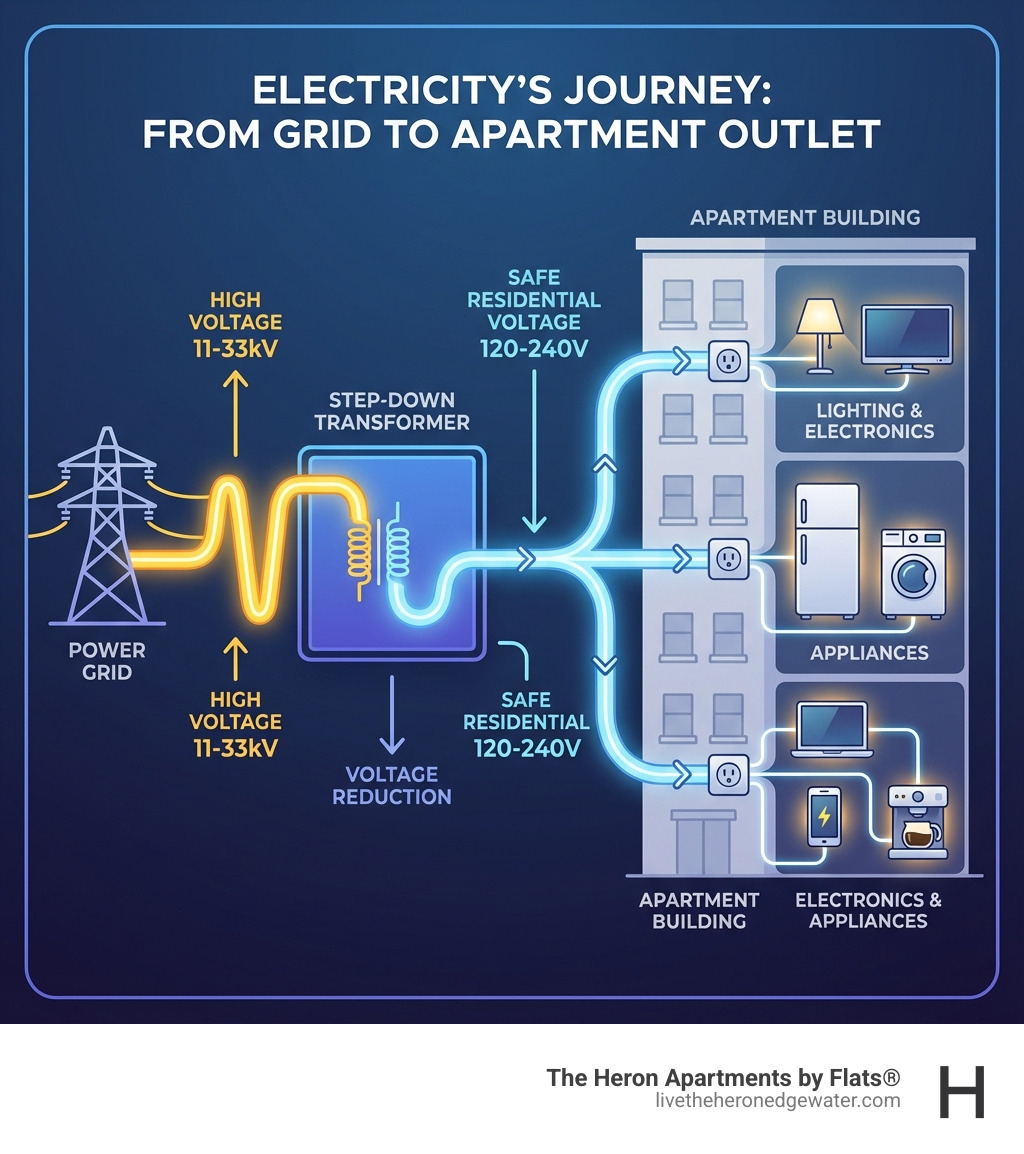
Transformer for apartments are critical electrical devices that step down high-voltage power from the utility grid to safe, usable levels for your home. Without them, the electricity arriving at your building—typically between 11,000 and 33,000 volts—would instantly damage appliances and create serious safety hazards.
Quick Answer: What You Need to Know
- Purpose: Transformers reduce dangerous high voltage from the power grid to safe residential voltage (120V-240V)
- Location: Usually found in dedicated electrical rooms, basements, or outdoor pads near the building
- Types: Dry-type (air-cooled, indoor) and oil-cooled (liquid-insulated, outdoor/high-capacity)
- Function: Enable safe power distribution, protect against surges, and minimize energy loss
- Sizing: Calculated based on total building load using National Electrical Code standards
Every time you plug in your phone, turn on a light, or power up your coffee maker, you're relying on a transformer working quietly behind the scenes. These devices are the unsung heroes of modern apartment living—converting massive amounts of electricity into the gentle current that powers your daily life.
The electrical journey from power plant to outlet is complex. Electricity travels long distances at extremely high voltages to reduce transmission losses. But that high voltage isn't safe for homes. That's where transformers come in.
In multi-unit residential buildings, transformers serve an even more critical role. They must balance loads across dozens or hundreds of units, protect sensitive electronics from power surges, and operate continuously without fail. Understanding how they work helps you appreciate the sophisticated infrastructure that makes modern apartment living possible.
The Unseen Hero: What is a Transformer and Why Do Apartments Need One?
Imagine electricity as a powerful, untamed river flowing from the utility company. It arrives at our cities, including vibrant communities like Edgewater and Chicago, at extremely high voltage levels—often 11,000 volts or even 33,000 volts. This immense power is efficient for long-distance transmission, but it's far too dangerous and intense for our everyday home appliances. Our lights, refrigerators, and phone chargers operate on much lower, safer voltages, typically 120V or 240V.
This is where the transformer for apartments steps in, acting as the ultimate electrical mediator.

At its core, a transformer is an electrical device that alters the voltage of electricity, either stepping it up or, more commonly for residential buildings, stepping it down. It achieves this through a principle called electromagnetic induction, a bit like magic, but with science! Inside, two coils of wire are wrapped around a magnetic core. When alternating current flows through the primary coil, it creates a fluctuating magnetic field. This field then induces a current in the secondary coil. The ratio of turns in these coils determines whether the voltage is increased or decreased. For our apartments in Illinois, the goal is always to decrease it.
Why the Voltage Reduction? It's All About Safety and Functionality
The primary function of a transformer in an apartment building's electrical system is to perform this crucial voltage reduction. Without it, the high-voltage electricity would literally fry our appliances, cause fires, and pose severe electrocution risks. It's simply not suitable for direct residential use.
So, why are these devices so essential for apartment buildings?
- Voltage Reduction: This is the most critical function. The high-voltage electricity from the grid needs to be stepped down to a safe, usable level for all our home electrical systems. This ensures that our devices, from the smallest lamp to the largest appliance, can operate without damage.
- Safety: By preventing dangerously high voltages from entering our living spaces, transformers are fundamental to electrical safety. They act as a barrier, protecting residents from potential hazards like electrical fires and shocks.
- Stable Power Supply: Transformers help maintain a consistent power supply. They ensure that the voltage remains within an acceptable range, preventing fluctuations that could harm sensitive electronics or cause unreliable operation of appliances.
The transformer is the unsung hero that makes electricity both powerful enough to reach us and gentle enough for us to use safely every day. For a deeper dive into how these systems are structured, you can explore An overview of Distribution Systems.
Powering Modern Living: How Transformers Ensure Efficiency and Protection
Beyond simply stepping down voltage, a transformer for apartments plays a sophisticated role in optimizing our electrical supply. They are pivotal in ensuring efficient load distribution, protecting against power surges, and even minimizing energy losses, all contributing to the seamless operation of our modern homes.
Efficient Load Distribution in Multi-Unit Complexes
Apartment buildings, especially large complexes like those in Chicago, are dynamic environments with constantly shifting electrical demands. Imagine dozens, if not hundreds, of units simultaneously running air conditioners, charging devices, cooking meals, and doing laundry. This creates a complex electrical load that needs careful management.
Transformers are instrumental in:
- Balancing Electrical Loads: They help distribute power evenly across multiple circuits and apartments. This prevents any single circuit from becoming overloaded, which could lead to tripped breakers, power outages, or even damage to the electrical system.
- Preventing System Overloads: By converting the high-voltage input into a lower, manageable voltage, transformers allow for more granular control over power distribution within the building. This helps prevent the entire system from being overwhelmed during peak usage times, ensuring everyone has the power they need when they need it.
Protection Against Power Surges
Our homes are filled with valuable electronics, from smart TVs to sophisticated kitchen appliances. These devices are vulnerable to voltage spikes and power surges, which can occur due to lightning strikes, utility grid fluctuations, or even the switching of heavy equipment on the grid.
Transformers offer a crucial layer of protection:
- Safeguarding Electronics: While not a primary surge protector in the same way a dedicated surge strip is, transformers inherently help buffer the electrical system from external voltage anomalies. By changing the voltage, they provide a degree of isolation from the direct impact of minor fluctuations on the main grid, helping to protect internal wiring and connected devices from damage.
- Power Quality: By stabilizing voltage, transformers contribute to overall power quality. This means cleaner, more consistent electricity for our sensitive electronics, prolonging their lifespan and ensuring optimal performance.
Minimizing Energy Losses
You might think that changing electricity would lead to energy loss, but the opposite is true in the grand scheme of power distribution. High voltage transmission is chosen precisely because it minimizes energy loss over long distances. However, converting that high voltage to usable residential levels efficiently is also key.
- Reduced Transmission Losses: By stepping down the voltage closer to the point of use (i.e., at or near the apartment building), the need for long runs of lower-voltage, higher-current wiring is reduced. Lower currents mean less resistive heat loss in the cables leading to individual apartments.
- Efficiency: Modern distribution transformers are remarkably efficient, typically operating at 98% to 99% efficiency. This means very little energy is lost in the change process itself. This efficiency is critical for managing the overall energy consumption of large residential buildings.
For a deeper understanding of the intricate workings of these essential devices, you can refer to More on how transformers work.
A Guide to the Right Transformer for Apartments
Choosing the right transformer for apartments is not a one-size-fits-all decision. It depends on factors like the building's size, its specific power demands, and installation environment. Let's explore the common types and how they cater to different needs in residential settings, including those found in Edgewater, Chicago.

Common Types of Transformers
The two most common types we encounter in apartment buildings are distribution transformers, which are generally categorized further into dry-type and oil-cooled variants based on their insulation and cooling methods.
- Distribution Transformers: These are the workhorses of residential power supply. They are specifically designed to step down the utility voltage to the lower voltages suitable for household use. They are typically found at the final stage of the power distribution system.
- Power Transformers: While often larger and used in generation or transmission stations, smaller power transformers can be used within a building's internal electrical infrastructure for specific high-demand applications or for voltage adjustments between internal systems.
Customization for Specific Power Demands
Every apartment building has unique power requirements. A smaller building might have vastly different needs than a high-rise with extensive common amenities like fitness centers, rooftop lounges, or electric vehicle charging stations. This is where customization comes into play.
- Building Size and Amenity Loads: The kVA (kilo-volt-ampere) rating of a transformer must be carefully selected to match the peak load of the entire building, including all individual units and shared amenities. This ensures sufficient power capacity without oversizing, which can be inefficient.
- Voltage Requirements: While the standard output is often 120V/240V, the incoming voltage from the utility can vary, necessitating transformers specifically designed for that input.
- Physical Configuration: Transformers can be customized in terms of their physical size, enclosure type, and mounting options to fit specific installation spaces within or around an apartment building.
Dry-Type vs. Oil-Cooled: What's the Difference for Residential Use?
When we talk about the specific types of transformers suitable for residential settings, the primary distinction often comes down to dry-type versus oil-cooled. The choice between them hinges on safety, location, maintenance, and environmental impact.
| Feature | Dry-Type Transformer | Oil-Cooled Transformer |
|---|---|---|
| Safety | Lower fire risk (no flammable liquid), air-cooled | Higher fire risk (flammable oil), requires containment |
| Location | Ideal for indoor installations, basements, electrical rooms | Primarily outdoor, on pads or vaults |
| Maintenance | Generally lower, visual inspections, cleaning | Higher, requires oil testing, periodic oil changes, leak checks |
| Environmental Impact | More environmentally friendly, no oil spills or disposal issues | Potential for oil spills, hazardous waste disposal |
| Cooling | Air-cooled, relies on natural convection or fans | Oil-cooled, oil dissipates heat more effectively |
| Noise Level | Can be slightly noisier at higher loads | Generally quieter due to oil dampening |
| Capacity | Up to several MVA, but often smaller for residential | Can handle very high capacities (MVA) |
Dry-Type Transformers
Dry-type transformers are increasingly popular for residential applications, especially for indoor installations within apartment buildings.
- Air-Cooled: As their name suggests, these transformers use air as their cooling medium. This eliminates the need for insulating liquids, which significantly reduces fire risk.
- Indoor Installation: Their inherent safety makes them ideal for placement in basements, dedicated electrical rooms, or other indoor spaces within the building envelope. This can be a significant advantage in urban environments like Chicago, where outdoor space is at a premium.
- Fire Safety: Without flammable oil, the risk of fire is drastically minimized, which is a critical consideration in multi-story residential buildings.
- Lower Maintenance: They generally require less maintenance compared to their oil-cooled counterparts, primarily involving visual inspections and cleaning.
Oil-Cooled Transformers
Oil-cooled transformers have been a staple in power distribution for decades and are still widely used, particularly for larger capacities and outdoor placements.
- Insulating Oil: These transformers use mineral oil or other synthetic fluids for both insulation and cooling. The oil is highly effective at dissipating heat generated during operation.
- Higher Capacity: Oil-cooled units can typically handle higher power capacities more efficiently than dry-type transformers, making them suitable for very large apartment complexes with substantial energy demands.
- Outdoor Placement: Due to the presence of oil and the need for proper ventilation, they are usually installed outdoors on concrete pads or in secure vaults.
- Cooling Efficiency: The oil's superior heat transfer properties allow these transformers to operate effectively even under heavy loads and in warmer climates.
Choosing the right transformer for apartments
When selecting a transformer for apartments in Illinois, the choice between dry-type and oil-cooled will depend on the specific project. For instance, a medium-sized apartment building in a dense urban area like Edgewater might favor dry-type for indoor safety and space efficiency. Conversely, a sprawling complex with significant power needs and available outdoor space might opt for oil-cooled for its higher capacity and cooling efficiency. We can customize transformers in terms of kVA rating, voltage, and physical configuration to meet the unique power demands of any apartment project, ensuring optimal performance and safety.
Installation and Upkeep: Best Practices for Apartment Transformers
The reliable and safe operation of a transformer for apartments hinges on meticulous installation and diligent maintenance. These aren't just suggestions; they are critical practices guided by national standards to ensure the safety and longevity of the entire electrical system.
Installation Considerations
Proper installation is paramount for any electrical component, especially one as central as a transformer. For apartment buildings in Chicago, adherence to the National Electrical Code (NEC) is not just a best practice, but a legal requirement.
- Sizing Calculations (NEC 220.84): This is perhaps the most crucial step. The transformer's kVA rating must be precisely calculated to handle the building's total electrical load. The NEC provides specific guidelines, such as Article 220.84, for calculating loads in apartment buildings. For example, the NEC calculated load for 30 apartment units could be around 327 kVA. This calculation must account for the peak load (when most residents are using electricity simultaneously) and allow for future growth or increased demand as technology evolves. Undersizing can lead to frequent overloads and failures, while oversizing can be inefficient.
- Location: Transformers should be installed in a safe, accessible area. This often means dedicated electrical rooms, basements, or secure outdoor pads adjacent to the building. The location must be chosen to minimize risk to residents and provide easy access for maintenance personnel.
- Safety Clearances: Adequate space must be maintained around the transformer for ventilation, routine maintenance, and emergency access. This prevents overheating and allows technicians to work safely.
- Ventilation: Especially for dry-type transformers, proper airflow is essential to dissipate heat and prevent overheating. Electrical rooms must be designed with sufficient ventilation systems.
- Proper Grounding: Earthing, or grounding, is a fundamental safety measure. The transformer must be properly grounded to prevent electrical hazards, ensuring that fault currents are safely directed away from the building's structure and residents. This is outlined in sections like NEC 450.10(A).
- NEC Compliance: All aspects of installation, from wiring to overcurrent protection, must strictly adhere to the National Electrical Code, ensuring the system meets the highest safety standards in Illinois.
Essential Maintenance for a transformer for apartments
Once installed, a transformer isn't a "set it and forget it" device. Regular maintenance is key to ensuring its longevity, efficiency, and continued safe operation.
- Visual Inspection: Routine visual checks can identify early signs of wear, damage, or potential issues. This includes looking for corrosion, loose connections, dust accumulation, signs of overheating, or any unusual noises.
- Cleaning: Dust and debris can accumulate on transformer surfaces, impeding cooling and potentially leading to electrical tracking. Regular cleaning, performed by qualified personnel, is vital.
- Load Monitoring: Continuously monitoring the transformer's load helps ensure it's operating within its design parameters. This can identify periods of high demand that might indicate a need for future upgrades or adjustments to the building's power management.
- Thermal Scanning: Infrared thermal scans can detect hot spots that are invisible to the naked eye. These hot spots often indicate loose connections, overloaded phases, or internal faults that could lead to failure if not addressed.
- Oil Testing (for oil-cooled units): For oil-cooled transformers, periodic oil sampling and testing are critical. Tests check for dielectric strength (insulating capability), moisture content, and dissolved gases, which can indicate internal arcing or overheating. This helps prevent catastrophic failures and extends the life of the unit.
By adhering to these installation and maintenance best practices, we ensure that the electrical heart of our apartment buildings continues to beat strongly and safely for years to come.
Beyond Electricity: The Other Kind of Apartment Change
While we've been focusing on the electrical kind of transformer, there's another exciting "change" happening in modern apartment living, particularly in innovative spaces like The Heron Apartments in Edgewater, Chicago. This isn't about voltage, but about optimizing space and enhancing lifestyle through smart design and technology.
Modern living, especially in urban centers, often means making the most of every square foot. This has led to a fascinating evolution in apartment design: the rise of transformable spaces and multi-functional furniture. We're talking about apartments that adapt to your daily life, effortlessly shifting from a bedroom to a living room, or an office to an entertainment zone.
These innovative solutions are designed to maximize the utility and comfort of your home, making even a studio apartment feel spacious and versatile. Imagine a bed that disappears into the ceiling, revealing a workspace or a lounge area, or a closet that expands and contracts as needed. This approach to design empowers residents to create a living environment that truly reflects their needs at any given moment.
For those curious about how such dynamic living spaces come to life, you can explore concepts like How to Transform Your Apartment. Innovative solutions such as the Ori Cloud Bed and the Ori Pocket Closet are perfect examples of how technology and design converge to maximize your home's potential. These smart, adaptable features truly redefine what's possible in apartment living, showing how a Studio Apartment Transformation can lead to a truly Transformable Apartment. It's a testament to how intelligent design can make our living spaces work harder and smarter for us.
Frequently Asked Questions about Apartment Transformers
We understand that electrical transformers can seem complex, but we hope this guide has demystified their essential role in apartment living. Here are answers to some common questions we often hear.
How is a transformer for an apartment building sized?
The sizing of a transformer for apartments is a critical engineering task based on the building's total calculated electrical load. This calculation follows stringent guidelines set forth by the National Electrical Code (NEC), specifically sections like NEC 220.84 for apartment units. Engineers assess the electrical demands of all individual apartment units, common areas (like lobbies, hallways, fitness centers, and laundry rooms), and any specialized equipment (such as elevators, HVAC systems, or EV charging stations).
For instance, for a building with 30 apartment units, the NEC calculated load could be around 327 kVA. The chosen transformer must be able to handle this peak load, ideally with some capacity for future growth and unexpected demands. It's a careful balance to ensure sufficient power without unnecessary oversizing, which can affect efficiency.
Where are transformers usually located in an apartment building?
The location of a transformer for apartments is chosen with safety, accessibility, and operational efficiency in mind. They are typically found in secure, dedicated electrical rooms, often located in the basement or on the ground floor of the building. In some cases, particularly for larger complexes or those with outdoor space, they might be installed on an outdoor concrete pad adjacent to the building. Regardless of the exact spot, the location always ensures:
- Security: To prevent unauthorized access and tampering.
- Ventilation: Adequate airflow is crucial to prevent overheating, especially for dry-type transformers.
- Accessibility: For routine maintenance, inspections, and emergency services.
- Safety Clearances: Sufficient space around the unit is maintained to comply with safety regulations and allow for safe working conditions.
Can a transformer be customized for a specific building?
Absolutely! Transformers can certainly be customized to meet the specific power demands of different apartment buildings. Every building is unique in its size, number of units, types of amenities, and local utility service. Customization can involve:
- kVA Rating: Tailoring the power capacity to precisely match the building's calculated load.
- Voltage: Ensuring the transformer perfectly matches the incoming utility voltage and provides the correct outgoing voltage for the building's internal systems.
- Physical Configuration: Adjusting the size, enclosure type (e.g., weatherproof for outdoor, specific fire ratings for indoor), and mounting options to fit the available space and environmental conditions.
- Features: Including specific features like low-sound options for residential areas or integrated monitoring systems.
This level of customization ensures that the electrical infrastructure is perfectly aligned with the building's needs, maximizing efficiency, safety, and reliability for residents in places like Edgewater and Chicago.
Conclusion
As we've explored, the transformer for apartments is far more than just a piece of electrical equipment; it's a fundamental component of our modern lifestyle. These unseen heroes diligently perform their critical function, changing raw, high-voltage power into the safe, usable electricity that lights our homes, powers our devices, and ensures our comfort.
Their importance cannot be overstated. From ensuring safe voltage reduction and efficient load distribution across multiple units to providing protection against power surges and minimizing energy losses, transformers are truly critical infrastructure. They underpin the reliable and safe power supply that we often take for granted, making modern living standards possible in every apartment, from the busy heart of Chicago to the serene streets of Edgewater.
At The Heron Apartments, we understand that a comfortable and convenient home starts with reliable infrastructure. Just as we prioritize modern amenities and adaptable living spaces, we recognize the essential role that high-quality electrical systems play in our residents' daily lives. We believe in providing not just apartments, but homes equipped with the sophisticated, dependable technology that supports a truly contemporary lifestyle.
Looking ahead, the future of apartment living is bright, marked by smart technology and increasingly adaptable spaces. We invite you to experience innovative living spaces in our apartments with Ori units, where cutting-edge design meets everyday practicality to transform your home.